


Day 47:

Sound as Vibration

وَرَتِّلِ ٱلْقُرْءَانَ تَرْتِيلًا

and recite the Quran ˹properly˺ in a measured way

Surah Al-Muzzammil 73:4

Coaching Insight

Sound is defined as “vibrations that travel through the air or another medium and can be heard when they reach a person’s or animal’s ear.” It is produced by continuous and regular vibrations. But sound is not just something we hear, it can be seen and felt.

Put your hand on your throat and say the letter H. Do that again and say “ahhhh” then  “eeee” and then “ooooo”. The air that you exhale through your vocal cords causes them to vibrate. That vibration is called your voice. Sounds put together in patterns shape words and speech. These vibrations are also called sound waves. These waves have many parts that make up the ‘sound’. Many people have studied the visuals created by these vibrations.

In the 1600s, Galileo and later Chladni conducted experiments capturing images on surfaces created by vibrations, leading to what became known as “Chladni’s Plates.” One of the many miracles of the Quran is that it was revealed, it was meant to be recited in a specific rhythmic, flowing manner to receive its utmost blessings and healing powers, and only recently, scientific proofs are being discovered.

“If you want to find the secrets of the universe, think in terms of energy, frequency and vibration”

Nikola Tesla

Daily Practice

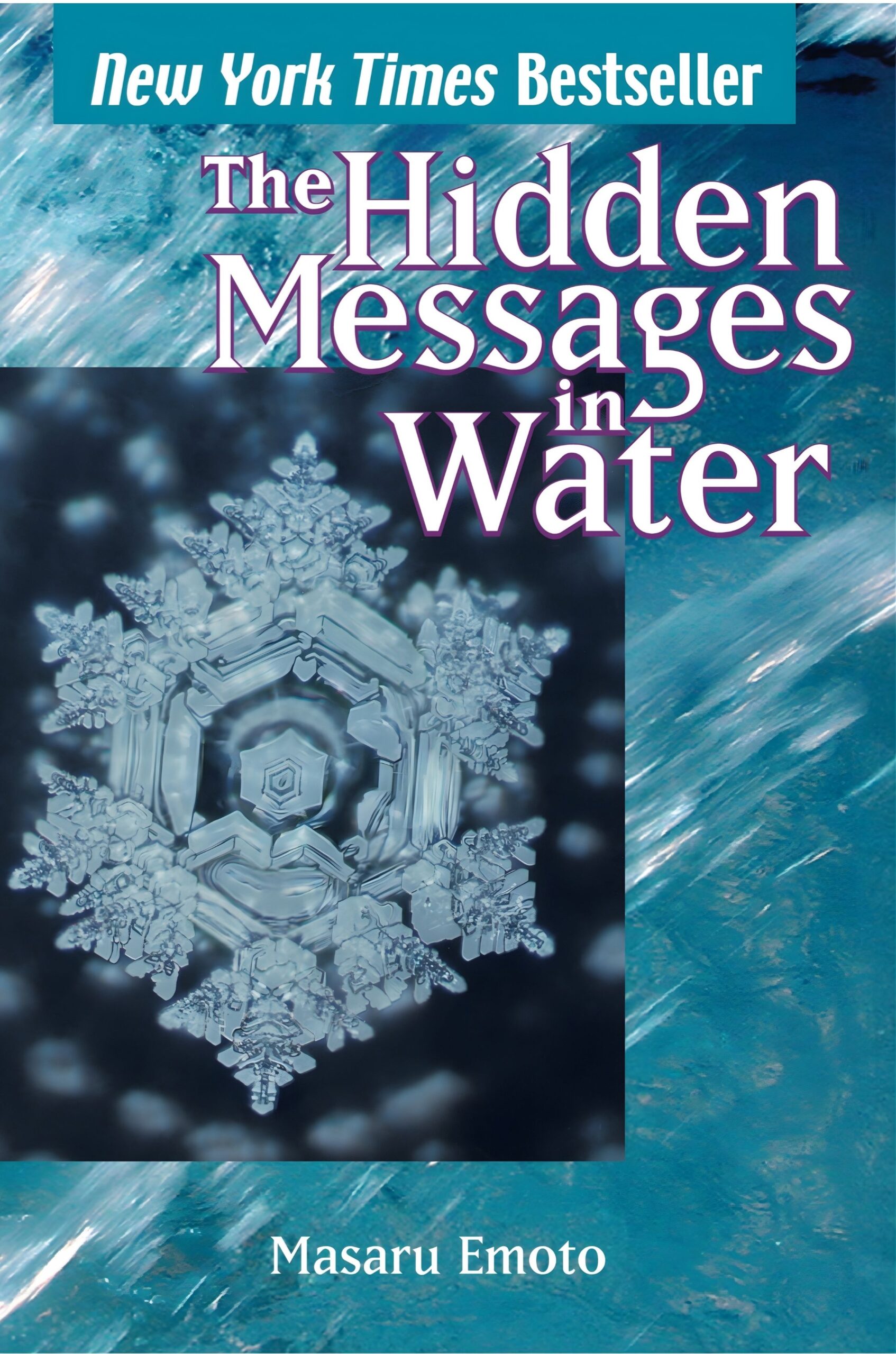
Dr. Masaru Emoto photographed how water crystals change based on sound, words, and intention. In collaboration with Dr. Ibrahim Karim, founder of Biogeometry™, Qur’anic recitation was observed to produce more harmonious crystal structures. Since the human body is nearly 80% water, this suggests Qur’anic vibrations can affect us on a physical level.

Today, choose a short Qur’anic recitation (for example, by Sheikh Omar Hisham). Sit still, close your eyes, and listen with intention. Notice any changes, calmer breath, a clearer mind, or a softening within.

You are constantly absorbing the sounds around you. Choose to be surrounded by those that bring clarity, presence, and inner alignment, beginning with the sacred rhythm of Divine words.

Notice any subtle shifts: a calmer breath, clearer awareness, or inner softening.

Book Reference

“I thank God that I have been given the opportunity to work in this capacity. I understand that some people have difficulty with the word or concept of God. The main focus in this book is water. And the more you understand water, the more difficult you will find it to deny the existence of a god. I’d like you to think about your feelings on this topic as you look through the crystal photographs found herein.”

The Hidden Messages in Water – Masaru Emoto.

“What does the injunction to “recite in a measured way” mean?

This is an indication that we must value pauses.

Elsewhere in the Qur’an, we see Allah direct us to natural imagery for emphasizing His majesty. In the aforementioned Surah Ar-Rahman we see:

ٱلشَّمْسُ وَٱلْقَمَرُ بِحُسْبَانٍۢ (٥) وَٱلنَّجْمُ وَٱلشَّجَرُ يَسْجُدَانِ( ٦) وَٱلسَّمَآءَ رَفَعَهَا وَوَضَعَ ٱلْمِيزَانَ (٧)
The sun and the moon ˹travel˺ with precision. The stars and the trees bow down ˹in submission˺. As for the sky, He raised it ˹high˺, and set the balance ˹of justice˺.

Given the Qur’anic claim that each verse is an Ayah or a proof of God, it always struck me as odd that Allah would tell us to pay attention to our surrounding environment and treat them as manifestations of Divine Power.

And this is exactly what boiled down into practice when I first heard the early 20th century Qaris — they paused, so we could listen to the silence. The Qur’an’s silence, to be exact. Once the Qari would go quiet for a solid minute or two, a listener like myself would listen to himself breathe. Listening to oneself breathe is a claustrophobic experience — it is a customary reminder of our own mortality. But once we suffocate ourselves enough, we hear a pigeon ruffle against the windowpane outside, and we hear the wind blow through the trees.”

The Beauty of Tarteel in Qur’anic Recitation; A Meditation on the “Pause” – Affan Shikoh